
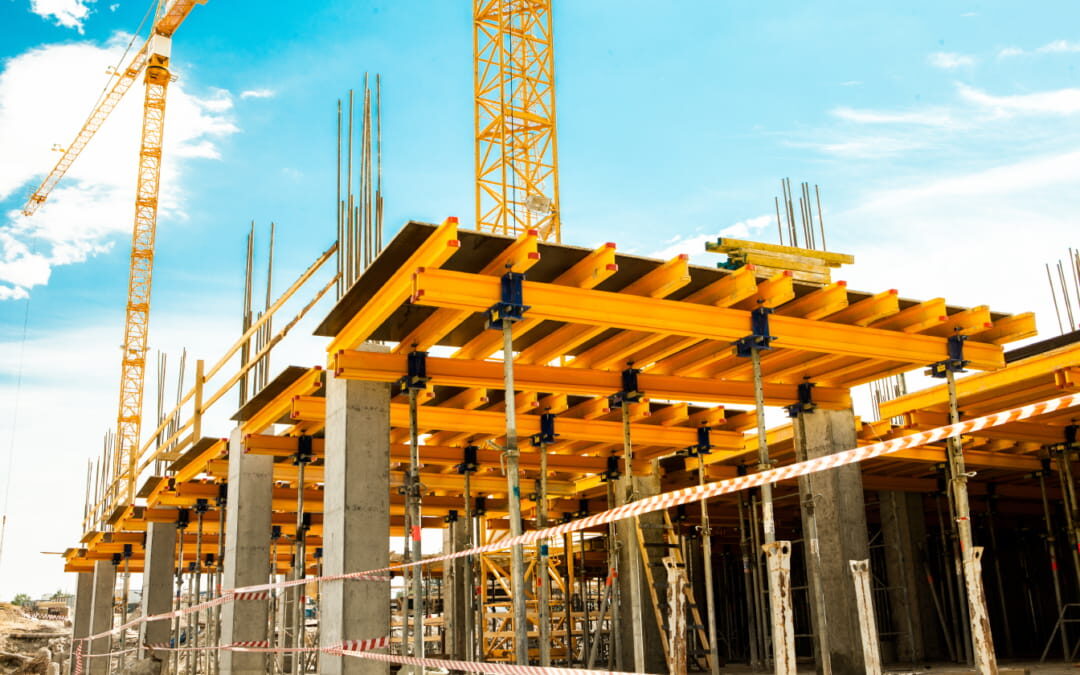
Important Qualities of Formwork
Even though in today’s world, our version of formwork might employ more sophisticated materials, the concept is certainly not a new one. The principle, in fact, was first developed by the ancient Romans who also happened to be the inventors of concrete. Rather than having to rely purely on stone and brick to create their structures, concrete offered a strong but more flexible alternative. The new material could be moulded into whatever shape an imaginative architect might visualise.
Poured into wooden moulds, the fresh concrete took on the form of the mould and, once it was fully cured, the formwork or falsework could be stripped away to reveal the solid structure beneath. Perhaps the most impressive and longest-surviving example of this centuries-old technique is the Pantheon in the Italian capital of Rome. The method was not only applied to concrete but proved to be an equally valuable option for shaping masonry.
Modern Use
Today, like concrete itself, the use of this ancient moulding technique has undergone vast changes that, together, have enabled some incredible architectural feats. The importance of both concrete and the formwork required to shape it continues to grow, fuelled by the increasing pressure on the building industry to keep pace with the needs of a rapidly growing world population.
Radical new design concepts have led to a gradual evolution from the simple plywood shuttering, although it is still invaluable in many applications. Not only is there now a need for stronger moulding materials, but portability and re-usability are now widely seen as important features of modern formwork.
Aluminium, steel and even fibreglass structures now provide tougher and more adaptable alternatives to plywood and are frequently used to pour an entire floor of a multi-storey building, before being raised to the next level, where the process is repeated.
Essential Qualities
- Strength: As well as being strong enough to handle the weight of the poured concrete, it should also be able to support that of those employed in the process.
- Rigidity: Horizontal and vertical props and bracing should ensure its shape is maintained.
- Leakproof: All joints should be sufficiently tight to eliminate any leakage.
- Safety: It should comply with all local safety regulations.
- Ease of Use: The formwork should be both easy to erect and to dismantle.
- Stability: In use, it should be sufficiently stable to withstand extremes of weather.
- Accessibility: Once in position, there should be ample access to enable the placement and compacting of the poured concrete.
These are the most crucial requirements of modern formwork – qualities for which Nhleko has long been recognised. Talk to us about custom-designed systems for large and medium scale constructions.