
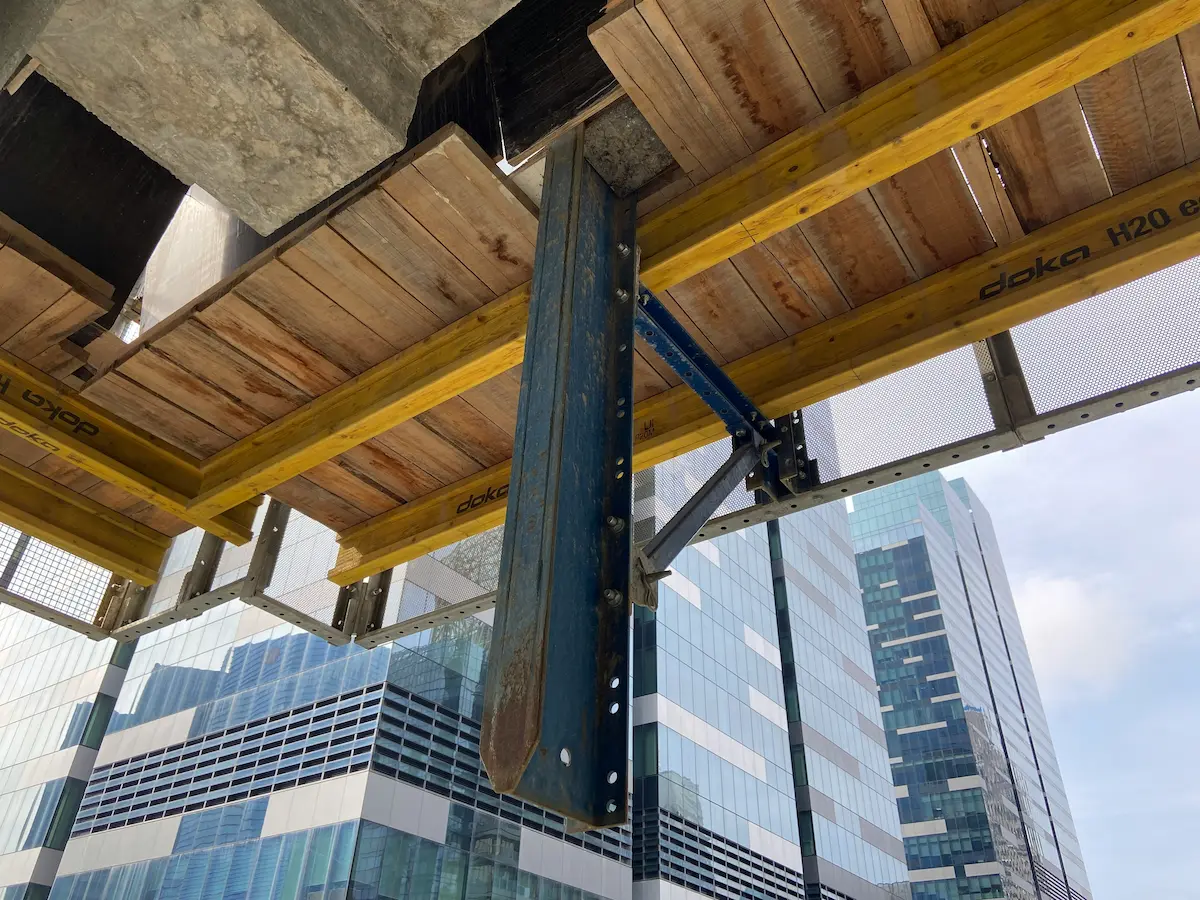
Formwork Types in South African Construction: Choosing the Right System for Your Project
Choosing between different formwork types in South Africa affects concrete quality, site speed, labour, and cost. The shuttering has to match the structure being poured, which is why the design and the install matter as much as the mix.
Nhleko Scaffolding & Formwork supplies formwork with the scaffolding needed for shuttering. Work on reconstruction, commercial, and residential sites gives contractors a practical view of which system, material, and site layout will hold.
Why Formwork Types in South Africa Matter for Concrete Construction
Formwork has to hold line and level under the pressure of wet concrete and leave a clean face. Poor planning shows up as wrong dimensions, honeycombing, extra patching, and lost days.
The basic requirements for shuttering are straightforward:
- Adequate strength and bracing for the expected loads
- Accurate dimensions and alignment
- Clean contact surfaces for a consistent concrete finish
- Safe installation, access, and dismantling
- Efficient stripping and potential for reuse
For contractors, the right concrete formwork types in South Africa are production decisions as much as structural ones. Nhleko’s teams have shuttered coffer slabs, columns, and rib and block work, including more than 15 units at Waterfall Country Estate.
How to Choose Timber for Shuttering On-Site
Timber still suits smaller jobs, odd dimensions, and work that has to be cut on site. Boards and plywood can be assembled around bespoke concrete forms where a hired panel system would sit idle after one pour.
It makes sense for one-off structures, small pours, unusual geometry, or jobs where the first material invoice has to stay low.
The trade-off is durability. Timber marks and swells with moisture, which shows after a few uses. Steel lasts longer, so the cost model should include the next pour, not only this one.
How Steel and Aluminium Formwork Improve Repeatability
For walls, beams, and columns that repeat, steel and aluminium hold dimension. Steel takes more pours. Aluminium is lighter when panels have to move around the site.
The main advantages include:
- Consistent panel dimensions
- Repeatable concrete finishes
- Faster installation across repetitive work
- Greater durability over multiple uses
- Less cutting and rebuilding of individual timber sections
Steel or aluminium shuttering is worth pricing on apartment blocks, commercial buildings, and infrastructure where the same mould is used again. At Nhleko, we also supply scaffolding packages to provide safe access around the pour.
On the reconstruction of Soshanguve Magistrate Court, we supplied and erected 180 tons of formwork and shuttered more than 8,000 m² of reinforced concrete slabs. That job is the useful test for whether a system can handle volume, not a brochure claim.
What to Check Before Choosing Slab or Column Formwork
Slab formwork and column formwork do different jobs. When you price shuttering, look at the element, not only the square metre rate:
Key considerations for structural formwork components include:
- Slab Shuttering
This forms the horizontal surface and must be propped for wet concrete, steel, workers, and construction loads. Prop positions, beams, and panel support set the slab level. Nhleko’s concrete shuttering work covers slabs, beams, and stairs on the same ticket when the programme needs it.
- Columns
Column formwork is a vertical mould. It has to keep line, dimension, and bracing during the pour. Wet-concrete pressure makes the connections and restraint the first items to check.
For both, plan the strip. Concrete needs strength before props come out, and the sequence should sit with competent people on site.
How to Select Shuttering for Your Budget and Project Scope
Start with the full scope of work:
- Project Size and Repetition: larger work can justify reusable steel for repeated pours.
- Geometry: complex or irregular designs may favour timber or specialist systems.
- Timelines: tight programmes punish slow assembly and slow stripping.
- Labour: count the hours and the skill needed to build, change, and drop the system.
- Site Access: panel weight, lifting gear, and working space decide what can actually go up.
- Budget: set hire or purchase against labour, reuse, and the cost of a bad face.
Where the job needs temporary access or propping without a capital buy, hiring scaffolding with the formwork is the usual route. Nhleko offers delivery, erection, and dismantling as well as formwork and project management consultancy.
Why Professional Planning Makes a Difference
For contractors comparing formwork types in South Africa, early input from Nhleko can lock the system before materials arrive. Call 011 025 9646 or write to quotes@nhlekoscaff.co.za for access and shuttering on the next pour.